Olivia Coleman · 9 November 2026
Tracing Performance Fluctuations Tied to Content Delivery Network Adjustments in Interactive Web Environments
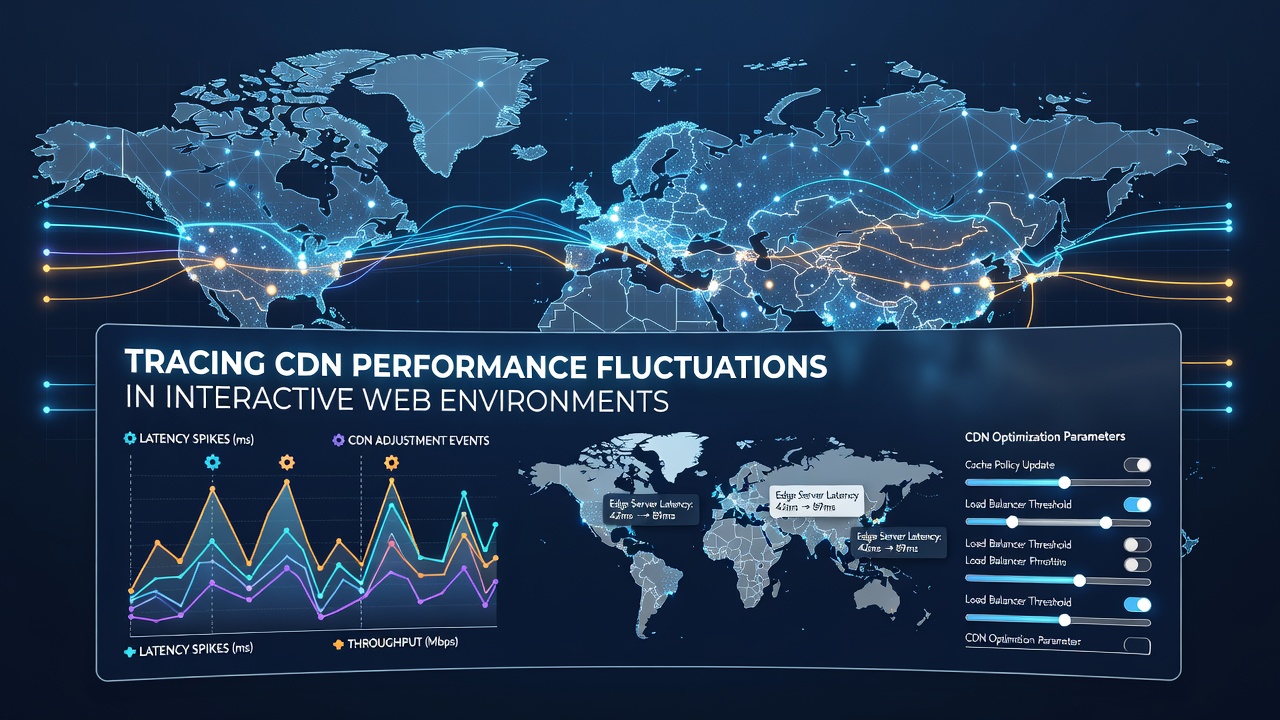
Performance fluctuations in interactive web environments frequently connect to modifications implemented across content delivery networks, where routing policies, cache invalidation rules, and edge server configurations undergo periodic updates that alter data delivery paths for users engaged in real-time applications such as collaborative platforms, dynamic dashboards, and live data visualization tools. Researchers at various institutions have tracked these shifts through detailed logging of request-response cycles, revealing patterns where even minor tweaks to anycast routing or origin shielding produced measurable variances in time-to-first-byte metrics across global user bases.
Core Mechanisms Behind CDN-Driven Changes
Content delivery networks operate through distributed edge locations that cache and serve assets closer to end users, yet adjustments to traffic steering algorithms or SSL termination points can reroute requests through alternate nodes, and this process introduces variability when those nodes experience differing levels of congestion or hardware provisioning. Studies conducted by academic teams have shown that load balancing modifications often coincide with spikes in jitter during peak interaction periods, while cache purge events triggered by content updates lead to temporary fallback to origin servers that extend round-trip times by factors documented in controlled test environments.
Observers note that interactive sessions, which rely on persistent WebSocket connections or frequent API polling, prove particularly sensitive to these alterations because any disruption in packet sequencing or increased hop counts directly impacts rendering consistency and user-perceived responsiveness. Data collected from monitoring suites deployed across multiple continents indicates that such fluctuations appear most pronounced during periods of infrastructure scaling, when providers expand or consolidate points of presence to optimize costs or accommodate traffic growth.
Tracing Techniques Employed by Analysts
Specialists rely on synthetic monitoring combined with real-user measurement to isolate CDN-related causes, deploying distributed probes that simulate interaction sequences while capturing detailed traces of DNS resolution, TCP handshake durations, and TLS negotiation times. These datasets allow correlation between specific configuration deployments and subsequent performance deviations, and teams have developed visualization frameworks that overlay network topology changes against latency heatmaps to pinpoint responsible adjustments.
Further refinement comes from integrating application performance management tools with CDN provider logs, which together highlight instances where edge cache hit ratios dropped following rule updates, forcing increased origin fetches that compound delays in multi-region setups. Evidence from longitudinal analyses demonstrates that such tracing often uncovers cascading effects, where one regional adjustment influences failover behavior elsewhere and creates broader instability patterns observable in aggregated metrics.
Observed Patterns in Recent Infrastructure Events
Throughout 2025 and into November 2026, several documented CDN configuration rollouts aligned with reported performance inconsistencies in interactive web services, prompting teams to implement more granular A/B testing of routing policies before full deployment. Figures from industry reports reveal that organizations adopting staged rollout strategies experienced fewer prolonged degradation windows compared to those executing simultaneous global changes, highlighting the value of phased validation in minimizing user impact.
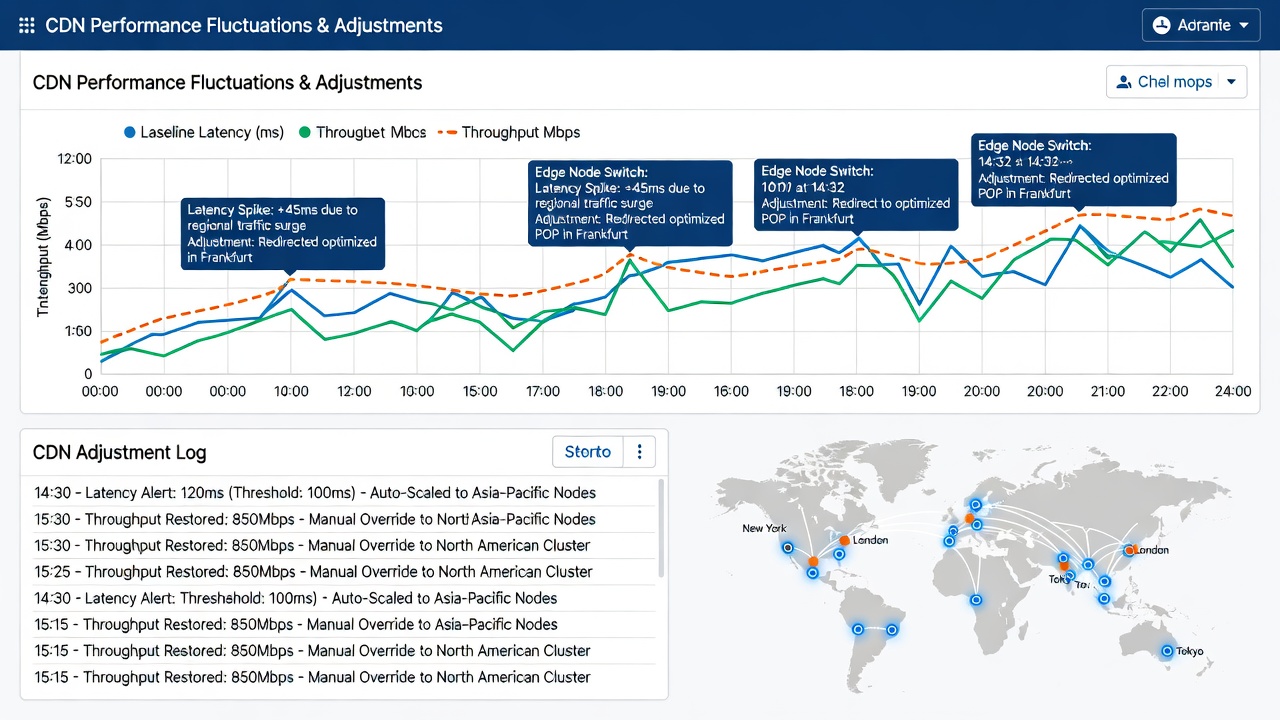
One study revealed that adjustments to compression algorithms at edge locations produced variable payload sizes which affected interactive element loading sequences, and researchers discovered this through packet capture analysis that isolated the timing discrepancies to specific content negotiation headers. Another case involved modifications to DDoS mitigation thresholds that inadvertently filtered legitimate long-polling requests, leading to session drops documented across multiple interactive platforms during high-traffic windows.
Geographic and Temporal Variations in Impact
Performance data compiled by monitoring consortia shows that regions with denser edge infrastructure tend to exhibit quicker recovery from CDN adjustments, whereas areas dependent on fewer nodes face extended periods of elevated latency following similar changes. Australian research initiatives have contributed datasets illustrating how transcontinental traffic routing modifications influenced interactive session stability for users in the Asia-Pacific zone, while parallel investigations from Canadian academic sources examined comparable effects within North American interconnects.
Temporal analysis further indicates that adjustments scheduled during off-peak hours still generate residual effects that surface during subsequent interactive usage peaks, and this lag arises because cached state propagation across the network requires time to stabilize. Analysts tracking these phenomena emphasize the importance of maintaining comprehensive baselines that account for both steady-state operations and transitional behaviors induced by configuration updates.
Conclusion
Tracing performance fluctuations tied to content delivery network adjustments requires systematic correlation of configuration timelines with granular telemetry from interactive web environments, and continued refinement of these methods supports more predictable delivery outcomes across distributed systems. Organizations benefit from adopting integrated observability approaches that connect network-layer events to application-layer experiences, enabling proactive identification of adjustment-related variances before they affect broader user cohorts. As infrastructure evolves, the ability to map these interconnections remains central to maintaining consistent responsiveness in dynamic web-based interactions.