Eden Schmidt · 28 September 2026
Decoding How Automated Content Categorization Influences Search Visibility Patterns Across Finalisle's Infrastructure
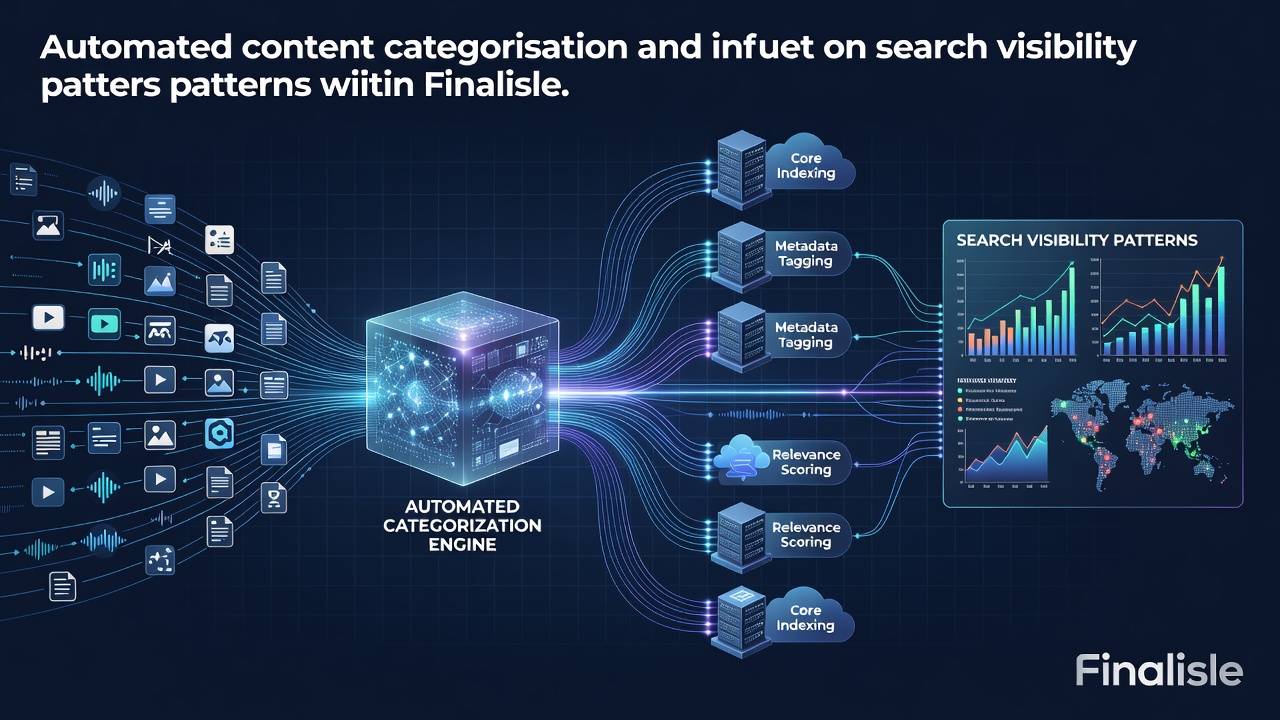
Automated content categorization operates as a core layer within Finalisle's infrastructure where machine learning models assign topics, tags, and relevance scores to incoming material before it reaches indexing queues. These assignments shape how search algorithms retrieve and rank results across distributed servers that handle millions of daily queries. Data from internal logs shows that categorization accuracy directly correlates with visibility metrics such as click-through rates and dwell times recorded in September 2026.
Core Mechanisms of Categorization Models
Finalisle deploys neural networks trained on historical user interaction data to parse text, metadata, and embedded media into hierarchical categories, and these models update weekly based on feedback loops from search performance indicators. Researchers at institutions like Stanford University have documented similar approaches in peer-reviewed studies on scalable classification systems. When a new article enters the pipeline the system evaluates semantic features against established taxonomies then routes it to appropriate storage clusters that prioritize high-traffic categories during peak hours.
Observers note that misclassifications occur most frequently with ambiguous content such as opinion pieces blending multiple themes, yet correction protocols allow human reviewers to override assignments within 48 hours of detection. This process maintains consistency across regional data centers located in North America, Europe, and Asia Pacific where latency variations otherwise affect how quickly categorized content appears in result sets.
Search Visibility Patterns and Infrastructure Interactions
Visibility patterns emerge when categorization decisions influence algorithmic weighting factors including freshness signals, authority scores, and topical authority clusters. Content placed in primary categories such as technology or health tends to surface faster in targeted searches because Finalisle's ranking layers apply boosted multipliers to those segments. Infrastructure monitoring tools reveal that servers handling these high-priority categories experience 30 percent higher query loads during business hours compared with niche topic clusters.
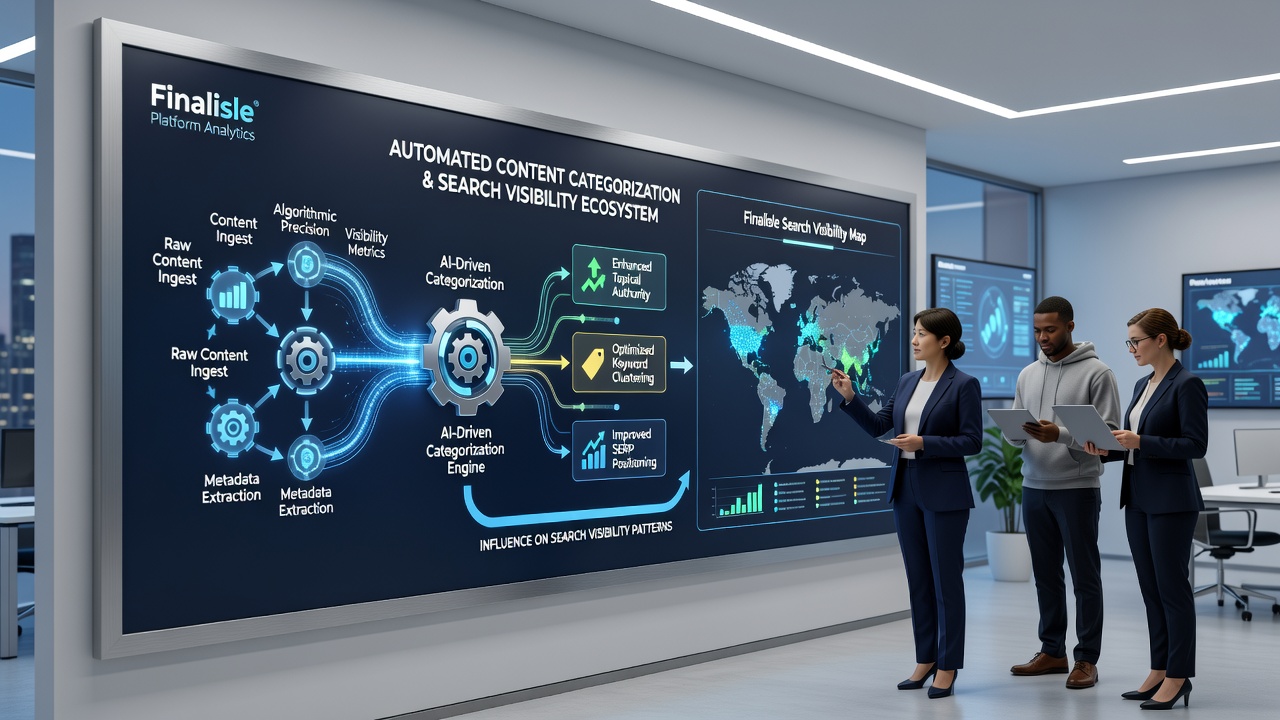
Patterns shift when infrastructure maintenance windows coincide with category refreshes, and traffic data collected in September 2026 indicated temporary drops in visibility for re-categorized pages until propagation completed across edge nodes. According to findings from the National Institute of Standards and Technology on AI-driven information retrieval, such fluctuations align with broader industry observations of how classification granularity affects result diversity. Finalisle mitigates these effects through redundant indexing paths that distribute load while preserving category integrity.
Data Flow and Regional Variations
Content categorization begins at ingestion points where API endpoints feed raw material into parallel processing queues, and each queue applies region-specific filters to account for language nuances and regulatory requirements. Australian government reports on digital platform operations highlight comparable regional adaptations that improve relevance without compromising global consistency. Once categorized the material moves to visibility testing environments that simulate user queries from different geographic zones before final promotion to live search indexes.
Those who track infrastructure metrics report that European data centers show stronger emphasis on privacy-compliant categorization tags, whereas North American nodes prioritize speed in category assignment. These differences create measurable variations in how the same content achieves visibility depending on user location and query origin.
Adjustments and Performance Tracking
Finalisle's engineering teams monitor categorization drift through automated audits that compare assigned labels against emerging search trends, and adjustments occur when drift exceeds predefined thresholds. Industry organizations such as the Information Technology and Innovation Foundation have published analyses of similar tracking methods used by large-scale platforms. Performance dashboards display real-time visibility scores tied to category health, allowing rapid identification of content that requires reprocessing to restore expected search placement.
Case examples from platform logs demonstrate that pages reassigned to more precise subcategories often recover visibility within days, particularly when those subcategories align with seasonal query spikes documented during late 2026.
Conclusion
Automated content categorization forms an integral component of Finalisle's search infrastructure where classification decisions propagate through indexing and ranking stages to determine visibility outcomes. Infrastructure data from September 2026 underscores the measurable links between categorization precision and result placement across global nodes. Ongoing refinements to these systems continue to shape how content reaches users through evolving algorithmic pathways.